

Climbing Higher Together
Every day, we meet people who are climbing mountains of their own.
Some are recovering from injuries or surgery. Others are learning to live with chronic pain, neurological conditions, anxiety, depression, grief, or life's unexpected challenges. Their journeys remind us that resilience isn't about reaching the summit overnight—it's about finding the strength to take the next step, even when the path feels difficult.
That's the heart of Climbing Higher Together.
On September 22, 2026, we'll climb Mount Kilimanjaro (5,895 meters), not simply as a personal adventure, but as a symbol of the resilience we witness every day in our community. While we're climbing one mountain, thousands of people across Burlington and Halton are climbing challenges of their own.
Through movement, storytelling, and giving, we're inviting our community to climb with us. You can support the campaign by Sponsoring a Meter, joining The 5,895 Challenge, sharing the journey, or making a donation to help strengthen local mental health services.
Our goal is to raise $5,895—one dollar for every meter of Kilimanjaro—to support mental health programs in Halton and remind people that no one has to face life's challenges alone.
Thank you for being part of this journey. Every step, every conversation, and every act of support helps someone else keep climbing.
You can access more information about our project on our website: https://pillarsofwellness.ca/climbing-higher-together/
Laurent & Lori
My achievements

Self Donated

Shared Page

Returning Participant

Raised 50% of goal

Reached Goal
My updates
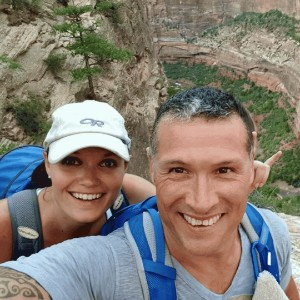
We Climbed Kilimanjaro: Seven Days to the Roof of Africa
Wednesday 7th Oct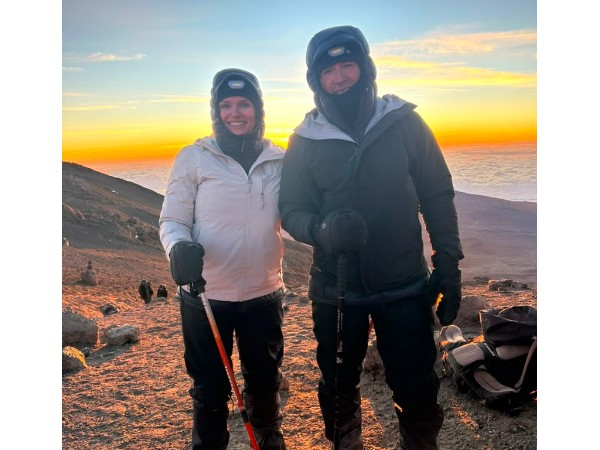
There are some experiences you can prepare for physically, plan for months, research endlessly, and still never fully understand until you live them.
Climbing Mount Kilimanjaro was one of those experiences.
On September 24, Lori and I began our journey up the Machame Route with one destination in mind: Uhuru Peak, 5,895 metres above sea level — the highest point in Africa.
But this climb was never simply about reaching a summit.
Through our Climbing Higher Together campaign, we wanted to recognize the resilience we see every day at Pillars of Wellness and raise awareness and funds for mental health through the Centre for Addiction and Mental Health (CAMH).
What we discovered over seven days was that Kilimanjaro has a way of stripping life down to its simplest elements.
Walk. Breathe. Eat. Drink. Rest. Repeat.
And eventually, even breathing becomes something you have to think about.
Day 1: Machame Gate to Machame Camp — The Adventure Begins
Machame Gate: approximately 1,640–1,800 m
Machame Camp: approximately 3,000 m
The journey began beneath a canopy of dense rainforest.
Everything was green, humid and alive. The trail climbed steadily through the forest as we settled into the rhythm that would define the week ahead.
Pole pole — slowly, slowly.
At first, that pace almost seemed unnecessarily slow. We felt strong. Our legs were fresh. Our packs were organized. The summit still felt very far away.
But Kilimanjaro rewards patience.
By the time we reached Machame Camp, we had already gained well over 1,000 metres of elevation. Our first tents were waiting for us, along with something we would quickly learn never to take for granted: a hot meal.
That first evening also introduced us to our new reality.
Our tent was now our bedroom, dressing room, storage space and shelter.
Two people, sleeping bags, duffel bags, clothes, boots and equipment all had to somehow coexist inside a very small space.
Getting changed required planning.
Finding something buried at the bottom of a bag became an expedition of its own.
And this was only night one.
Day 2: Machame Camp to Shira 2 Camp — Leaving the Forest Behind
Shira 2 Camp: approximately 3,810–3,840 m
The landscape changed dramatically on our second day.
The rainforest gradually disappeared and gave way to open moorland, rock and sweeping views across the Shira Plateau.
For the first time, the scale of Kilimanjaro really began to reveal itself.
And so did the altitude.
At almost 4,000 metres, the air was becoming noticeably thinner. The mountain was also becoming drier.
Our lips dried out. Our noses became irritated. Dust found its way onto our clothes, equipment and faces.
The comfortable oxygen-rich environment we take for granted at home was slowly disappearing.
Walking remained manageable, particularly when we maintained our slow pace.
It was the small things that were surprising.
Bending over to tie a boot.
Opening a duffel bag.
Changing clothes.
Organizing equipment.
Sometimes you would stand back up after doing something completely ordinary and suddenly realize:
I'm out of breath.
That was when Kilimanjaro began teaching us an important lesson.
At altitude, there are very few "small" efforts.
Day 3: Shira 2 to Lava Tower and Barranco Camp — Climb High, Sleep Low
Shira 2: approximately 3,840 m
Lava Tower: approximately 4,630 m
Barranco Camp: approximately 3,976 m
Day three was one of the most important acclimatization days of the expedition.
We climbed toward Lava Tower, rising above 4,600 metres for the first time.
The vegetation became sparse. The landscape became increasingly barren. Dust and volcanic rock replaced much of the greenery we had left behind.
And the air became noticeably thinner.
Every uphill section demanded more concentration.
You learn quickly that fighting the mountain is pointless.
You shorten your stride.
You control your breathing.
You follow the person ahead of you.
And you keep moving.
After reaching Lava Tower, we descended to Barranco Camp. This "climb high, sleep low" strategy is one of the reasons the seven-day Machame Route allows the body more time to acclimatize.
Barranco also gave us one of the most dramatic sights of the entire expedition.
Towering above camp was the Barranco Wall.
And tomorrow morning, we were going straight up it.
Day 4: Barranco Camp to Karanga Camp — Taking on the Barranco Wall
Barranco Camp: approximately 3,976 m
Karanga Camp: approximately 3,995 m
From below, the Barranco Wall looks intimidating.
It rises almost directly out of the valley, with a line of climbers slowly zigzagging upward across the rock.
Once we started climbing, however, intimidation turned into excitement.
This was different from simply hiking uphill.
There were sections where we used our hands. Places where we carefully stepped around rock faces. Moments where we stopped and looked back at the enormous landscape opening beneath us.
Our guides were always there.
A hand when necessary.
A direction.
A warning about a loose rock.
A reminder to slow down.
Eventually, we reached the top.
And that moment was spectacular.
But Kilimanjaro rarely lets you celebrate for too long.
There were more valleys to cross, more climbing and eventually another descent before the final approach into Karanga Camp.
By now, fatigue was accumulating.
Not the fatigue of one difficult workout.
This was day-after-day fatigue.
You slept, but never quite as comfortably as at home. Your muscles recovered, but never completely. The dry air continued to affect your throat and nose. Dust seemed permanently attached to everything.
And every morning, you packed it all up and started walking again.
Day 5: Karanga to Kosovo Camp — Entering the Thin Air
Karanga Camp: approximately 3,995 m
Barafu Camp: approximately 4,673 m
Kosovo Camp: approximately 4,870 m
This was when Kilimanjaro began to feel truly serious.
We climbed steadily from Karanga toward Barafu, the traditional high camp used by many climbers preparing for their summit attempt.
But Barafu wasn't our final destination.
We continued upward.
Our final camp would be Kosovo Camp, at approximately 4,870 metres — nearly 16,000 feet above sea level.
There was very little vegetation left.
Just rock, volcanic terrain, cold, dust and sky.
And thin air.
Very thin air.
This was perhaps one of the strangest parts of the experience.
You could be sitting quietly and feel reasonably good. Then you would decide to change your socks, organize your backpack or tie your boots.
Suddenly you were breathing heavily.
Packing and unpacking our bags became tiring.
Getting dressed became tiring.
Moving around inside the tent became tiring.
Even preparing yourself to go to sleep took effort.
At sea level, these activities are almost meaningless physically.
At nearly 4,900 metres, your body notices everything.
Then there was the tent.
After several nights, the novelty of camping had definitely disappeared.
The space felt smaller every night.
Your equipment seemed to multiply.
Your sleeping bag never quite stayed where you wanted it.
Getting up required manoeuvring around bags, clothing and another person.
Comfort was no longer part of the equation.
And yet, outside that tiny tent stood one of the most extraordinary landscapes we had ever seen.
Above us was the summit of Africa.
We were almost there.
The People Who Made the Mountain Possible
There is something important about climbing Kilimanjaro that photographs of the summit can never fully explain.
You do not climb this mountain alone.
Behind every climber is an extraordinary team.
Our guides watched our pace, our breathing, our energy and our condition.
Our porters carried loads up terrain that challenged us while carrying only our daypacks.
And somehow, after we had spent hours walking, we would arrive at camp to discover that our camp team had already reached it.
Our tents were standing.
Our equipment was there.
Water was being prepared.
And food was coming.
The organization behind the scenes was remarkable.
And our cook deserves special recognition.
The food was amazing.
Considering where we were, what was being carried up the mountain and the conditions in which meals were being prepared, we were continually surprised by how good the food was.
Warm soups, carbohydrates, proteins and hot meals became something we looked forward to after hours on the trail.
Food wasn't just fuel anymore.
It was comfort.
It was morale.
It was one of those small moments each day when everyone could sit together and temporarily forget about how many metres still separated us from the summit.
Our achievement belongs in part to every person on that mountain who helped us get there.
Summit Night: Kosovo Camp to Uhuru Peak — Into the Darkness
Kosovo Camp: approximately 4,870 m
Stella Point: approximately 5,756 m
Uhuru Peak: 5,895 m / 19,341 ft
Then came the night we had been thinking about for months.
Summit night.
We left Kosovo Camp in darkness.
Headlamps illuminated only a small section of trail ahead of us.
Beyond that circle of light was blackness.
The climb became almost meditative.
Step.
Pole.
Breathe.
Step.
Pole.
Breathe.
There was no reason to think about the entire mountain anymore.
The only useful objective was the next step.
As we climbed higher, the oxygen continued to decrease and every movement became more demanding.
Fatigue accumulated.
The cold surrounded us.
The trail seemed endless.
And somewhere during those final hours, the challenge stopped being primarily about our legs.
It became mental.
Your body wants rest.
The summit still seems impossibly far away.
But you keep moving.
Pole pole.
Slowly.
Always forward.
The Final Hours — When the Mountain Asked Everything From Us
The final portion of the climb was the hardest part of the entire expedition.
Above 5,000 metres, the thin air changed everything.
Our pace slowed dramatically.
Simple movements required concentration.
Fatigue that had accumulated over several days was now combined with severe altitude, cold and lack of sleep.
There were moments when the body simply felt depleted.
But somewhere ahead was Stella Point.
And beyond Stella Point was Uhuru Peak.
We continued.
One step at a time.
Eventually, darkness began giving way to morning.
The horizon changed colour.
The mountain slowly appeared around us.
And after days of looking upward toward Kilimanjaro, we were suddenly looking across the roof of Africa.
Uhuru Peak — 5,895 Metres
Then we saw it.
The summit sign.
Uhuru Peak.
5,895 metres.
19,341 feet.
The highest point in Africa.
We had made it.
Months of preparation.
Days of climbing.
Dust.
Cold.
Dry air.
Exhaustion.
Uncomfortable nights.
Thousands upon thousands of steps.
All of it had brought us here.
Standing at the summit was emotional because the achievement wasn't simply about reaching 5,895 metres.
It represented everything required to get there.
Preparation.
Patience.
Teamwork.
Adaptation.
Determination.
And resilience.
Those were exactly the ideas behind Climbing Higher Together from the beginning.
The Summit Wasn't the Finish Line
There is one thing photographs at Uhuru Peak don't show.
You still have to get down.
After reaching the highest point in Africa, we turned around and began the long descent.
Back toward Kosovo and Barafu.
Down through the barren alpine landscape.
Eventually toward Mweka Camp at approximately 3,100 metres.
The descent was long and demanding on already exhausted legs.
But something remarkable happens as you lose altitude.
The air begins to feel different.
Breathing becomes easier.
Vegetation eventually returns.
The mountain slowly gives your body back the things it had taken away.
After days of constantly climbing higher, going down felt almost surreal.
Day 7: Mweka Camp to Mweka Gate — The Final Steps
Mweka Camp: approximately 3,100 m
Mweka Gate: approximately 1,640 m
Our final morning took us back into the rainforest.
The landscape that had disappeared days earlier returned around us.
Trees.
Humidity.
Dense vegetation.
And oxygen.
Lots of wonderful oxygen.
Step by step, we descended toward Mweka Gate.
And then suddenly there were no more kilometres to walk.
No more camp to reach.
No more tent to organize.
No more boots to lace up for tomorrow.
We had climbed Mount Kilimanjaro.
What Kilimanjaro Taught Us
Before this expedition, it was easy to think about Kilimanjaro in numbers.
5,895 metres.
Seven days.
Approximately 60 kilometres.
Five ecological zones.
But after climbing it, those numbers seem almost irrelevant.
What stays with us are the moments.
Standing beneath the Barranco Wall wondering how we were going to climb it.
Trying to find a clean pair of socks inside a chaotic tent.
Laughing about how exhausting it had become simply to get dressed.
Dust on our faces.
Dry throats.
Cold mornings.
Hot meals.
The encouragement of our guides.
Watching porters move confidently past us on the trail.
Seeing our tents waiting in the distance after a long day.
Looking upward at a sky filled with stars.
And finally watching the African sunrise from almost six kilometres above sea level.
Kilimanjaro was uncomfortable.
It was exhausting.
At times, it was incredibly difficult.
And it was absolutely extraordinary.
Climbing Higher Together
We originally called this journey Climbing Higher Together because we wanted the mountain to represent something larger than ourselves.
Through our work at Pillars of Wellness, we meet people every day who are climbing mountains that don't appear on maps.
Recovering from injury.
Living with chronic pain.
Adapting to neurological conditions.
Working through mental health challenges.
Rebuilding confidence.
Trying again after setbacks.
Their mountains may look very different from Kilimanjaro, but resilience often works the same way.
You don't have to conquer everything at once.
Sometimes you simply take the next step.
And then another.
And another.
Our journey to Uhuru Peak at 5,895 metres is now finished.
But the message behind it remains.
The mountain reminded us that extraordinary things rarely happen because of one heroic moment.
They happen because people keep moving when things become uncomfortable.
Because someone encourages you when your energy disappears.
Because a team supports you when you cannot do everything yourself.
And because sometimes the biggest mountains become possible when we climb them together.
We went to Kilimanjaro hoping to reach the summit.
We came home understanding much more clearly what it means to keep climbing.
Share
Before the Mountain: Gear, Medication and the Journey to Kilimanjaro
Wednesday 23rd SepAfter months of training, planning and talking about Kilimanjaro, the climb is finally here.
But before taking our first step on the Machame Route, there was another challenge to navigate: getting ourselves — and everything we needed — from Canada to Tanzania.
Preparing to climb Mount Kilimanjaro isn't simply about becoming physically fit. In the final weeks, our attention shifted from training to equipment, medication, packing, airline restrictions and one question that became increasingly important:
What happens if our luggage doesn't arrive with us?
When you are travelling for a regular vacation, delayed luggage is frustrating. When you are scheduled to begin a seven-day climb to 5,895 metres shortly after arriving, it can affect the entire expedition.
Preparing for More Than Just the Climb
Our gear preparation took months.
Kilimanjaro requires clothing and equipment for dramatically different environments. The lower slopes can be warm and humid, while higher elevations bring wind, freezing temperatures and potentially severe cold around summit night.
That meant thinking in layers rather than simply packing "warm clothes": base layers, insulating layers, waterproof protection, hiking socks, gloves and mittens, head protection, proper footwear and the equipment we would need each day.
Then there were the smaller things that suddenly didn't seem so small: headlamps, batteries, charging equipment, water systems, sunglasses, cameras and personal items.
Every piece had a purpose, but every piece also added weight.
And that created our next challenge.
The Carry-On Dilemma
One of our biggest concerns was our checked luggage being delayed.
Our journey involved multiple flights and a relatively short connection. Every additional transfer creates another point where luggage needs to make it from one aircraft to another.
We therefore wanted enough essential climbing equipment in our carry-on backpacks that, in a worst-case scenario, we could still begin the expedition even if our checked bags arrived late.
The problem? Airline carry-on limits.
Ethiopian Airlines currently lists an Economy Class cabin allowance of one piece weighing up to 7 kg, with maximum dimensions of 23 × 40 × 55 cm.
Seven kilograms disappears remarkably quickly when you're carrying technical clothing, electronics and essential climbing equipment.
That created a balancing act.
What absolutely had to remain with us? What could go into checked luggage? And what could realistically be replaced in Tanzania if something went wrong?
There was also an uncomfortable possibility: even after carefully packing our backpacks, the airline could determine that a bag was too heavy or too large for the cabin and require us to check it.
Suddenly, our "backup plan" could become part of the luggage we were trying to protect ourselves from losing.
Why Delayed Luggage Matters More on Kilimanjaro
A delayed suitcase is normally an inconvenience.
For an expedition, timing changes everything.
We couldn't simply wait several days for a suitcase to arrive. Our climb had a scheduled starting date, guides, porters, accommodations and an itinerary designed around gradual progression up the mountain.
If critical equipment didn't arrive in time, we would face difficult choices: find replacement equipment locally, rent what was available, change our plans or potentially jeopardize the climb.
Airlines do have systems for tracing delayed baggage. Ethiopian Airlines, for example, uses WorldTracer and advises passengers to report missing baggage immediately and obtain a Property Irregularity Report reference number.
But knowing that a suitcase is being searched for doesn't necessarily solve the immediate problem when your expedition is leaving.
So we added another layer of protection.
A Small Tracker for a Very Important Bag
We placed tracking devices inside our luggage.
An AirTag or compatible tracking device cannot prevent a suitcase from being delayed, and it doesn't replace the airline's baggage-tracing system. What it can provide is additional information about where the bag may be.
Interestingly, Ethiopian Airlines now specifically provides a process for passengers to share an AirTag location link when reporting delayed baggage, which can help with locating a missing bag.
For us, the trackers were less about technology and more about reducing uncertainty.
If our bags didn't appear on the carousel in Tanzania, at least we might have some indication whether they were nearby, sitting at our connecting airport or thousands of kilometres behind us.
The Short-Layover Problem
Our connection added another concern.
A short layover might be convenient for passengers, but it leaves less time for both people and luggage to make the next aircraft.
We could move quickly through the airport.
Our suitcases couldn't.
Once checked in Toronto, they were largely outside our control. They needed to be unloaded, sorted, transferred and loaded onto the connecting flight while we made our own way to the next gate.
Missing the connection ourselves was one concern.
Arriving in Tanzania while our climbing equipment remained behind was another.
It was a good reminder that expedition planning extends far beyond the mountain itself.
Preparing the Medical Kit
Medication was another important part of our preparation.
Kilimanjaro rises to approximately 5,895 metres, where altitude illness is a genuine concern. The CDC recommends that travellers heading to high altitude discuss prevention and appropriate medication with a healthcare professional.
Our preparation therefore included speaking with our doctor and organizing the medications and basic medical supplies appropriate for our trip rather than simply building our own pharmacy.
Travel guidance also recommends keeping essential medications in carry-on luggage, in their original labelled containers, and bringing enough for the trip plus additional medication in case of travel delays.
Just like our boots and essential layers, medication wasn't something we wanted separated from us.
Now, the Mountain
There comes a point when preparation has to end.
We trained. We researched. We tested equipment. We packed, unpacked and repacked. We weighed bags and debated what belonged in the cabin versus the suitcase. We prepared for altitude, weather, delayed luggage and tight connections.
But you can never eliminate every risk.
You can only prepare for as many as possible.
Tomorrow, September 24, we begin the Machame Route.
For months, Kilimanjaro has existed on training schedules, equipment lists, maps and computer screens.
Tomorrow, it becomes real.
And step by step, we begin climbing higher together.
Share
Thank You for Helping Us Climb Higher Together
Saturday 15th AugAs we prepare for our Mount Kilimanjaro climb this September, we want to take a moment to say a heartfelt thank you to everyone who has donated to our Climbing Higher Together fundraiser in support of CAMH.
Every donation—large or small—means more than simply helping us move closer to our $5,895 fundraising goal, one dollar for every meter of Kilimanjaro. It represents encouragement, compassion, and a shared belief that mental health deserves greater awareness, support, and conversation.
When Lori and I take our first steps toward the summit, we will be carrying far more than our backpacks. We will be carrying the support of our family, friends, patients, colleagues, businesses, and members of our community who have chosen to stand behind this cause.
To everyone who has already sponsored a meter, shared our story, or encouraged us along the way: thank you for being part of this journey.
The summit may be our destination, but the real purpose of this climb is the impact we can create together.
We are climbing higher together—one step, one meter, and one donation at a time.
With gratitude,
Laurent & Lori
Why We're Supporting Mental Health
Friday 7th Aug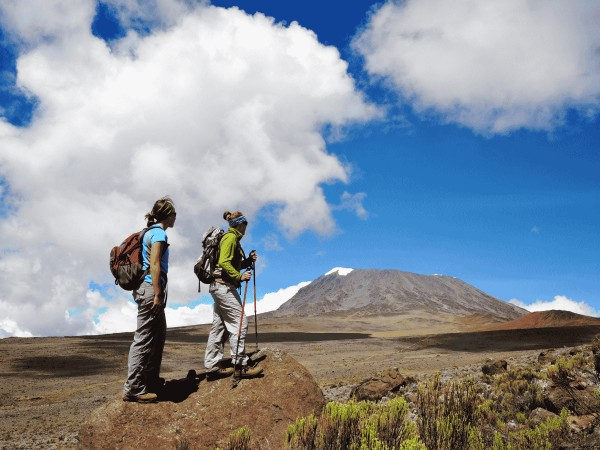
Every Day, We Meet People Climbing Mountains of Their Own
On September 24, 2026, we'll begin a seven-day climb up Mount Kilimanjaro, Africa's highest mountain at 5,895 meters.
For many people, climbing Kilimanjaro is a bucket-list adventure. For us, it's something much more meaningful.
Every day at Pillars of Wellness we work with people facing challenges that can feel like mountains of their own. Some are recovering from injuries or surgery. Others are learning to manage chronic pain, neurological conditions, mobility limitations, anxiety, depression, grief, or life's unexpected obstacles.
Although every journey is different, they all have something in common: resilience.
We've seen firsthand that progress doesn't always happen in giant leaps. Sometimes it's taking a few more steps without pain. Sometimes it's returning to work after an injury. Sometimes it's finding the courage to ask for help. Every achievement matters.
That resilience inspired Climbing Higher Together. More information on our page: https://pillarsofwellness.ca/climbing-higher-together/
More Than a Mountain
Kilimanjaro will challenge us physically and mentally.
There will be steep climbs, changing weather, fatigue, high altitude, and moments when taking the next step feels difficult.
Those moments remind us of what so many people experience every day.
While we'll be climbing one mountain in Tanzania, thousands of people throughout Burlington and Halton are climbing challenges of their own.
Our goal isn't simply to reach the summit.
Our goal is to remind people that no one has to climb alone.
Why We're Supporting Mental Health
Mental health affects every family, every workplace, every school, and every community.
Many people silently face anxiety, depression, stress, grief, burnout, or other mental health challenges while continuing to care for their families, go to work, and support those around them.
Recovery often begins with one conversation, one connection, and one person willing to help.
That's why we're proud to support CAMH Halton through this campaign.
Funds raised will help strengthen access to local mental health programs and services that make a real difference in people's lives.
Introducing Climbing Higher Together
Climbing Higher Together is a community movement built around one simple belief:
Every step counts.
You don't need to climb Mount Kilimanjaro to participate.
Walk your neighborhood.
Hike your favourite trail.
Ride your bike.
Go for a run.
Complete your rehabilitation exercises.
Join a fitness class.
Move in whatever way works for you.
Every step honor someone overcoming challenges while supporting better mental health in our community.
The 5,895 Challenge
Mount Kilimanjaro stands 5,895 meters above sea level.
To celebrate that journey, we're inviting everyone to take part in the 5,895 Challenge.
Participate on your own or with your family, workplace, school, sports team, or community group.
Set a movement goal that's meaningful to you, track your progress, and encourage others to join you.
It's not about who finishes first.
It's about climbing together.
Sponsor a Meter
We're also inviting our community to help us reach our fundraising goal by Sponsoring a Meter.
Our goal is to raise $5,895—one dollar for every meter of Mount Kilimanjaro.
Whether you sponsor one meter or one hundred, every donation helps strengthen local mental health services while showing someone they don't have to face life's challenges alone.
Every contribution makes a difference.
Follow the Journey
Throughout the expedition, we'll be sharing photos, videos, stories, and reflections directly from Mount Kilimanjaro.
We'll take you along every stage of the climb—from the rainforest to the alpine desert and, hopefully, all the way to Uhuru Peak.
More importantly, we'll share the stories that inspired this journey in the first place.
Climbing Higher Together
We believe resilience grows when communities come together.
Whether you're donating, joining the 5,895 Challenge, sponsoring a meter, sharing our campaign, or simply encouraging someone who needs support, you're helping create a lasting impact.
Together, we can celebrate resilience, strengthen our community, and remind people that every mountain is easier to climb when we climb together.
Thank you for joining us on this journey.
Laurent & Lori
ShareThank you to my donors

$500
Pillars Of Wellness
$200
Lisa Hassani
$159
Nubranch Media
Amazing! Best of luck!
$159
Suzanne Houser
Good luck, Laurent & Lori!
$150
Deb Desjardine-jones
We are so proud of both of you!! Mom and Dave
$106
David Desjardine
Go Lori and Larent Go!!!
$106
Cybulski Family
$106
Garry Desjardine
Thanks for what you are doing…..Uncle Garry
$106
Rachel Greenwood
Proud of you both! Can't wait to hear all about it. ♥️
$106
Anmarie Hoffman
Way to go Lori & Laurant!
$106
Helen Civiero
Thank you Pillars of Wellness for taking the time to make a difference for a great organization CAMH that truly helps and makes a difference in our communities.
$106
Mickey Bellavia
$106
Mari Maskell
Go Lori & Laurent!!!
$100
Catherine & Chris Mcdonald
Best of luck on your amazing climb! We'll be cheering you on!
$100
Klick Ppc
Good luck!
$100
John Mepham
Sending positive energy and strength for your climb !!!
$79.50
L & A Woods
$75
Here Virtually Inc
Way to go, Laurent & Lori!
$53
Diane Thrasher
$53
Brenda Couckuyt
What an inspiration you are! You can do this ! So proud of you both.❤️
$53
Charles Macdonald
$53
Helik Family
Good luck and have fun!
$53
Christelle Lemaine
De tout cœur à vous deux!! Plein de courage
$53
Mary Ann Walper
Good luck!
$53
Andrew Bryant
Never give up!
$53
Andrew Bryant
My wife Carol and I climbed Kili in 2003. It was a great experience. Good luck on a great cause!
$53
Cynthia Contino
$53
Anonymous
Good luck!
$50
Lucille
$50
Damien Pinci
$50
William Smallwood
$50
Emily Lewis
Wishing you both all the best with the climb!
$26.50
Marianne Lucio
What an amazing goal! Stay safe, Lori and Laurent. Brenda Couckuyt is a good friend and she told me about your incredible adventure.
$26.50
Anonymous
$26.50
Brandie Oliver
In memory of Carla Crowther, whose light and kindness I will never forget.
$26.50
Kelly A
$26.50
Jeremy Mcneil
You two will crush it !
$26.50
Kimberly Hoffman Laporte
$25
Katie Marsh
You got this!!


